
The Beauty of a Country That Contains Many Worlds
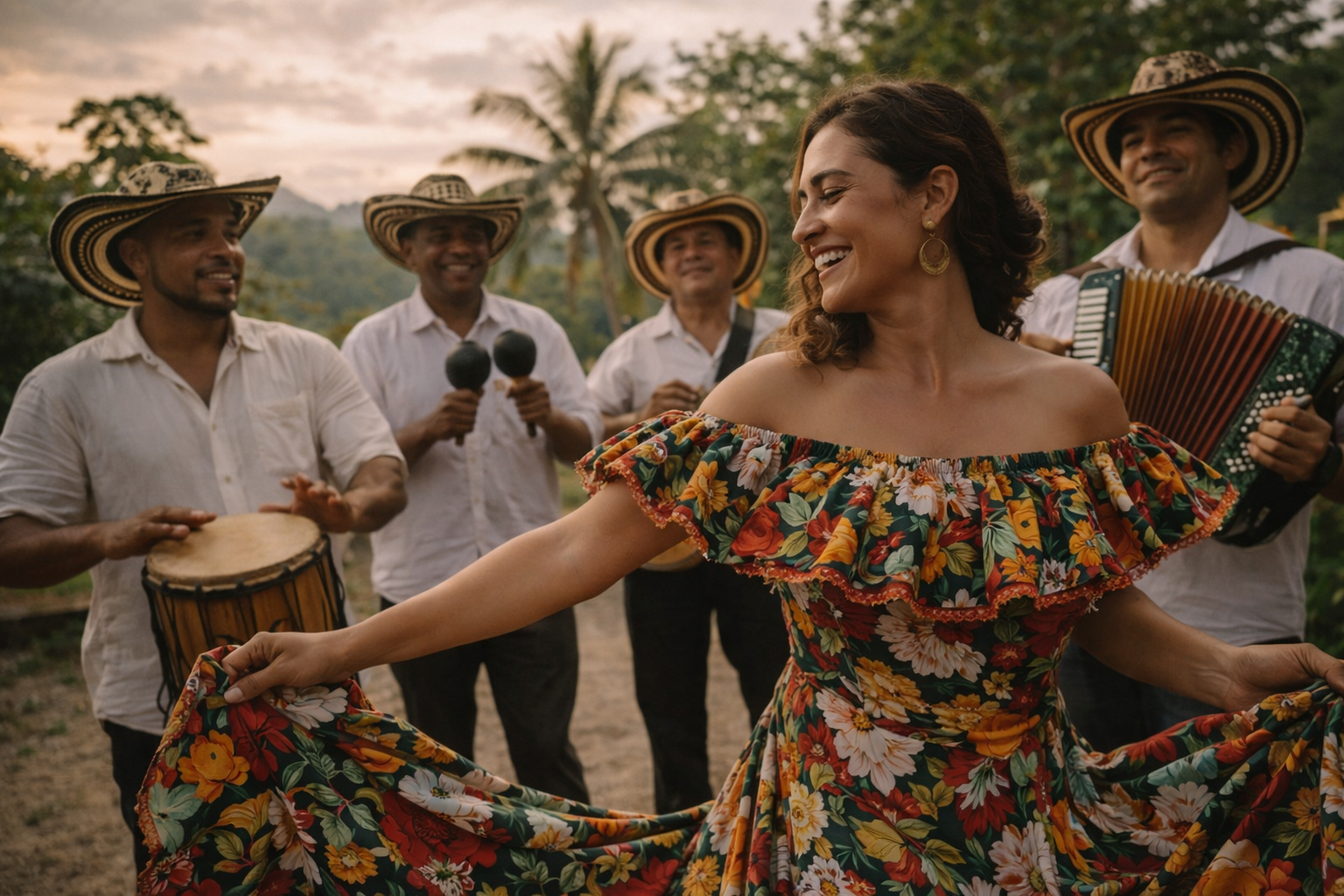
“In Colombia, diversity is not just a landscape — it is a lived experience.”
Many years ago, I walked into a small shop in Amsterdam and ended up in a long conversation with its owners. At some point, they asked me where I was born. When I answered, “Colombia,” they looked genuinely surprised — they never would have guessed.
When I travel, I love observing the people of the places I visit: how they look, how they dress, how they move, the gestures they use to communicate. And yet, more often than not — language and clothing aside — I find myself thinking: that person could easily be Colombian. They feel familiar. They resemble a friend. They could belong to any corner of my country.
In Colombia, diversity is not just a landscape — it is a lived experience.
Beyond its immense natural richness, Colombia is one of the most ethnically diverse countries in Latin America and in the world. Its population emerged from a profound convergence of Indigenous civilizations, European — primarily Spanish — settlers, and African communities brought during the colonial period. The result is a complex, layered, beautifully plural society.
The origins of this mixture are far from romantic. They are rooted in colonialism, enslavement, and violent histories of imposition. Yet from that difficult past emerged a coexistence of cultures, knowledge systems, and identities that make Colombia deeply compelling, vibrant, and multicultural.
In a world that grows increasingly globalized and visually standardized — where beauty ideals and social rhythms begin to look the same across continents — finding a country that still holds such a wide spectrum of traditions, flavors, faces, colors, and expressions is extraordinary. In Colombia, these differences shift dramatically from one region to the next, creating a destination that cannot be understood from a distance. It must be experienced — slowly, openly, with curiosity — allowing that subtle sense of magic (what many call magical realism) to unfold along the way.
From this convergence of continents and memories are born countless dishes - as we explore in our guide to Colombian cuisine — a
, rituals, ancestral practices — and one of my favorite expressions: rhythm.
Music in Colombia is not an accessory. It is a way of inhabiting life. It accompanies us from birth. It runs through our veins. It has been refuge and resistance in difficult times. It is the invisible thread that connects us through movement, flavor, and shared emotion.
Colombia moves to the sound of drums, marimbas, flutes, accordions, gaitas, tiples, bandolas, llanero harps, and guacharacas — instruments that tell stories, invite us to dance, sing, laugh, and experience that magical realism so beautifully described by our Nobel Prize–winning author, Gabriel García Márquez.
So if you are someone who travels to expand your awareness, your perspective, and your understanding of the world, Colombia offers a living territory — one that invites you to move, to feel, to celebrate, and to awaken the deepest fibers of who you are.
